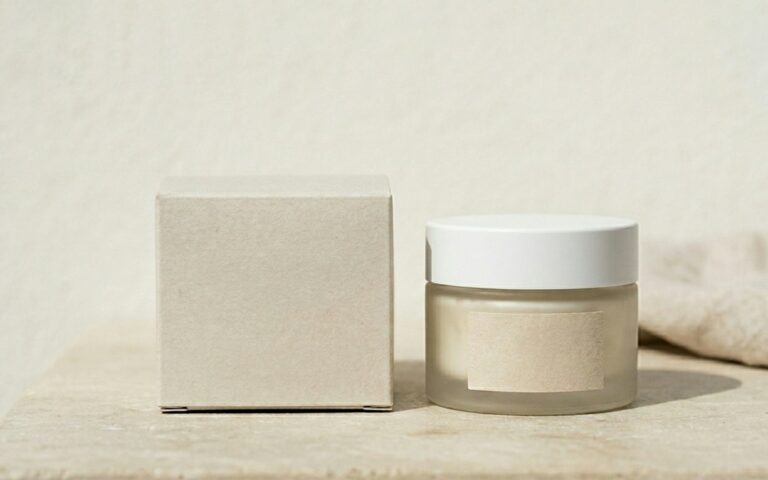

A night skincare routine is one of the easiest ways to build a consistent skincare habit. There is no rush to get out of the door, no sunscreen to reapply and no make-up to protect. Five minutes before bed is enough. You do not need a shelf of products, just a sensible order and the habit of doing it.
This guide explains a simple four-step night skincare routine, why each step matters, and how to adjust it for warm, humid conditions in Dubai and other hot climates.
Why the evening routine matters
During the day your skin deals with sunlight, heat, sweat, pollution and whatever you put on it in the morning. By night, much of that is still sitting on the surface. Clearing it away gives your skin a clean start before several hours of rest.
There is also some evidence that skin behaves a little differently at night. In a small study of healthy volunteers, researchers measured water loss through the skin every two hours across a day. They found that the skin was more permeable in the evening and at night than in the morning (Yosipovitch and colleagues, 1998). That does not mean any product works “better at night”, but it is a reasonable argument for moisturising before bed.
The four steps
1. Take off make-up and sunscreen
If you wore sunscreen, make-up or a heavy moisturiser, take it off first. A gentle micellar water, a cleansing balm or an oil-based cleanser loosens these more easily than a face wash alone. Use soft cotton pads or your fingertips, and avoid rubbing hard around the eyes.
If you wore nothing on your face today, you can skip straight to step 2.
2. Cleanse gently
Wash your face with lukewarm water and a mild, non-abrasive cleanser. Apply it with your fingertips rather than a washcloth or scrubbing brush, rinse well, then pat your skin dry with a clean, soft towel. The American Academy of Dermatology gives the same advice: wash twice a day and after heavy sweating, use lukewarm water, and do not scrub.
Very hot water and harsh, foaming soaps can leave skin feeling tight, which is a sign you may be stripping away more than dirt. Aim for skin that feels clean and comfortable, not squeaky.
3. Treat, only if you need to
This is the optional step. If a doctor or dermatologist has prescribed a cream, or you use a targeted product such as a serum, this is usually where it goes. Some active ingredients, retinoids in particular, are normally advised for evening use. They can be broken down by sunlight and may make skin more sensitive to the sun.
Two simple rules keep this step safe:
- Introduce one new product at a time. If your skin reacts, you will know which product caused it.
- Patch-test anything new first. Our guide to patch-testing a new skincare product explains how.
If you are not using a treatment, leave this step out. A shorter routine you follow every night is better than a long one you abandon after a week.
4. Moisturise
Finish with a moisturiser or night cream suited to your skin. Use a small amount, warm it between your fingertips and press it gently over your face and neck, avoiding the eye area unless the product says it is suitable there.
Always follow the directions on the label. Some products are meant to stay on overnight. Others, including our own CC Whitening Cream, are applied in a thin layer at night and rinsed off after a few hours. Our how to use page sets out those directions step by step.
The order, at a glance
| Step | What to do | Skip it if… |
|---|---|---|
| 1. Take off make-up | Take off sunscreen and make-up with a gentle remover | You wore nothing on your face |
| 2. Cleanse | Lukewarm water, mild cleanser, fingertips, pat dry | Never skip |
| 3. Treat | Prescribed or targeted product, one at a time | You do not use one |
| 4. Moisturise | Thin layer of moisturiser or night cream, as directed | Never skip |
A useful rule of thumb when layering is to go from the thinnest texture to the thickest: watery products first, creams last.
Adapting the routine to warm, humid weather
Heat and humidity change how products feel on the skin. A rich cream that suits a dry winter in north India can feel heavy in a humid summer in Dubai.
- Choose lighter textures in humid months. Gel creams and lotions often feel more comfortable than thick balms.
- Wash after heavy sweating, but do not cleanse more than you need to. Two gentle washes a day is plenty for most people.
- Keep your pillowcase clean. Changing it regularly helps, especially if you sweat at night.
- Air-conditioning dries skin. If you sleep in an air-conditioned room and wake up with tight skin, you may need a slightly richer moisturiser.
Common mistakes to avoid
- Doing too much at once. Several new products in the same week make it impossible to tell what suits you.
- Scrubbing or over-exfoliating. Harsh scrubs and frequent exfoliation can irritate skin. Gentle is enough.
- Sleeping in make-up. Even on a tired night, a quick cleanse takes less than two minutes.
- Expecting overnight results. Skin changes slowly. Give any routine several weeks before judging it, and stop anything that causes stinging, redness or itching.
When to see a dermatologist
A routine like this is for everyday care. It is not a treatment for skin conditions. See a doctor or dermatologist if you have a persistent rash, painful spots, patches that change, or skin that reacts to most products you try.
Summary
Take off make-up and sunscreen, cleanse gently, treat only if you need to, and moisturise. Keep the routine short, add one new product at a time, and give it several weeks.
Night skincare routine: the quick answer
A practical night skincare routine has four steps: remove makeup or sunscreen if needed, gently cleanse, apply any product specifically recommended for your skin, and moisturise. The best night skincare routine is usually one you can follow consistently without irritation. You do not need every new serum or trend.
For beginners, a night skincare routine can take only a few minutes. Follow the instructions on each product, avoid using several strong actives for the first time together, and keep your morning sun-protection routine separate. The American Academy of Dermatology also emphasises gentle cleansing, moisturising and daily sun protection.
Build a night skincare routine for your skin type
Night skincare routine for oily or combination skin
If your face feels oily by evening, resist the temptation to scrub or wash repeatedly. A gentle cleanser followed by a comfortable, non-comedogenic moisturiser may be enough. Combination skin can need different amounts of moisturiser on different areas. A night skincare routine should leave skin feeling comfortable, not tight or stinging.
Night skincare routine for dry skin
Dry skin often feels better with a gentle, non-stripping cleanser and a moisturiser applied while the skin is still slightly damp. If the air is dry or air-conditioning runs overnight, you may prefer a richer texture. Keep your night skincare routine uncomplicated while you learn what your skin tolerates.
Night skincare routine for sensitive skin
Sensitive skin benefits from caution. Choose a simple night skincare routine with fewer unfamiliar products and avoid adding a strong exfoliant and a new treatment on the same evening. If you try something new, follow the patch-testing guide and watch for persistent irritation.
Common mistakes in a night skincare routine
- Too many products at once. When several items are introduced together, it can be difficult to identify the cause of a reaction.
- Scrubbing to remove oil. Vigorous rubbing, abrasive tools and very hot water can irritate the skin rather than improve a night skincare routine.
- Skipping moisturiser because your skin is oily. Oily skin can still benefit from suitable moisturising products; choose textures that feel comfortable.
- Applying treatments without directions. Some actives should be introduced gradually or avoided in particular situations. Follow the label or your dermatologist’s plan.
- Expecting overnight change. A night skincare routine is a habit, not a guarantee of visible results the next morning.
A simple weekly night skincare routine plan
Keep the first week deliberately predictable. On ordinary evenings, follow the basic four steps. If you use a prescribed treatment, use it only as directed; do not assume that more frequent application means faster improvement.
During week one, observe how your skin feels after cleansing and moisturising. If a new product makes skin uncomfortable, do not add another product to cover up the problem. Reconsider what changed, review its ingredients and directions, and seek professional help if a reaction is significant.
Once your skin is comfortable, you can refine your night skincare routine to suit season, activity and skin type. In humid weather, some people prefer light textures; in drier conditions, others prefer richer moisturisers. Neither choice is inherently best for everyone.
Frequently asked questions about a night skincare routine
What is the correct order of a night skincare routine?
Remove makeup or sunscreen where necessary, cleanse gently, use any suitable targeted treatment as directed, then moisturise. Always check the individual product’s directions, because not every formula is used in the same order.
Do I need a separate night cream?
Not necessarily. A night skincare routine can use a suitable moisturiser that feels comfortable. Products described as night creams vary in ingredients and intended uses, so compare the actual label rather than relying on the name alone.
Can I use a face cream every night?
Follow the directions of the particular cream and consider your skin’s tolerance. A night skincare routine should not override specific usage instructions. Read the Chemmus & Chuppas application guide before using our products.
What should I use in the morning?
Your night skincare routine is only one part of everyday care. During the day, protect exposed skin from the sun; the American Academy of Dermatology recommends broad-spectrum sunscreen with SPF 30 or higher when choosing sunscreen.
Keep your night skincare routine easy to maintain
A reliable night skincare routine starts with gentle cleansing, comfort and consistency. Learn about our ingredient information, compare available cream sizes, or ask our team a product question. Choose based on instructions and personal needs—not an unsupported claim that one formula works for everyone.
References
- American Academy of Dermatology. Face washing 101.
- Yosipovitch G, Xiong GL, Haus E, Sackett-Lundeen L, Ashkenazi I, Maibach HI. Time-dependent variations of the skin barrier function in humans: transepidermal water loss, stratum corneum hydration, skin surface pH, and skin temperature. Journal of Investigative Dermatology. 1998;110(1):20–23. PubMed.
- American Academy of Dermatology. Dermatologists’ top tips for relieving dry skin.
- American Academy of Dermatology. How to test skin care products.