A new cream can feel pleasant on the first try and still disagree with your skin. If you want to know how to patch-test skincare, start with a home patch test on a small, hidden patch of skin before you put a product all over your face. It costs nothing, and it makes sense every time you try something new, including our own products.
Why patch-test at all?
Most skin reactions to cosmetics fall into two groups.
- Irritant reactions happen when a product is too harsh for your skin: stinging, burning, dryness or redness, often soon after applying it. Anyone can get one, especially with strong actives or frequent use.
- Allergic reactions (allergic contact dermatitis) happen when your immune system reacts to a particular ingredient, such as a fragrance or preservative. They often appear hours or a couple of days after contact. Once you are allergic to something, you usually stay allergic to it.
A patch test will not catch everything, but it gives you a good chance of spotting either kind of reaction on a small area first.
Before you start
- Test one product at a time. If you test three at once and react, you will not know which caused it.
- Choose a time when your skin is calm. Do not test on broken, sunburnt or irritated skin.
- Read the label. If it lists something you already know you react to, do not use it.
- Note the date you start, so you know when the test ends.
How to patch-test, step by step
The American Academy of Dermatology suggests the following approach.
1. Pick a hidden spot
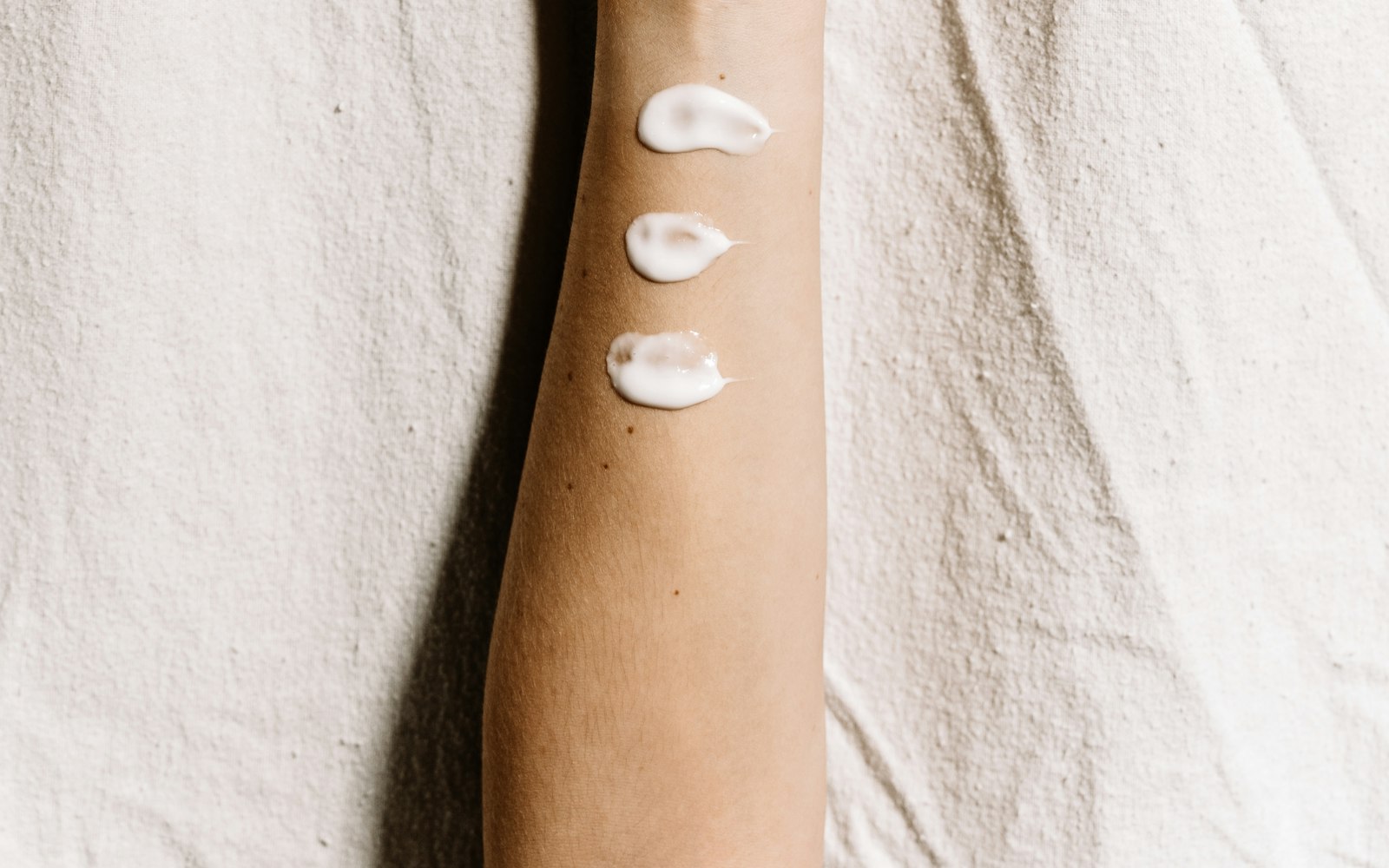
Use an area where the product will not be rubbed or washed off too quickly. The inner forearm or the bend of the elbow both work well.
2. Apply a coin-sized amount
Apply the product to an area roughly the size of a large coin, using the same amount and thickness you would normally use.
3. Use it the way you would on your face
- Leave-on products such as moisturisers, serums and night creams: leave on as you normally would.
- Wash-off products such as cleansers and masks, or creams whose directions say to rinse after a set time: follow the directions on the label, then rinse.
4. Repeat for 7 to 10 days
Apply twice a day for seven to ten days. A single application is not enough, because some reactions only appear after repeated use.
5. Check the area each day
Look for redness, itching, swelling, burning, bumps or a rash on the test area.
6. If all is well, try a small area of the face
If your skin has stayed calm, try the product on a small area of your face, such as along the jawline, for a few days before using it everywhere. The skin on your face is thinner than on your arm and can be more sensitive.
What to do if you react
- Wash the product off gently with lukewarm water as soon as you notice a reaction.
- Stop using the product.
- A cool compress can ease mild discomfort.
- If the reaction is severe, spreading, or has not settled within a few days, see a doctor or dermatologist. Take the product, or a photo of its ingredient list, with you.
Mild tingling for a minute or two with some active ingredients can be normal. Burning that continues, redness that spreads, or anything that itches is not. When in doubt, wash it off.
What a home patch test can and cannot tell you
A home test is a sensible precaution, not a guarantee.
- A clear result is reassuring, not certain. Your face may still react where your arm did not, and you can develop an allergy to an ingredient after using it without trouble for some time.
- It is not the same as clinical patch testing. If you keep reacting to products, a dermatologist can arrange formal patch tests. Small amounts of common allergens are applied to your back under patches and checked over several days. This can identify the specific ingredient so you can avoid it in future.
A simple patch-test record
| Day | Morning | Evening | Any change? |
|---|---|---|---|
| 1 | ✓ | ✓ | |
| 2 | ✓ | ✓ | |
| 3 | ✓ | ✓ | |
| … | |||
| 7–10 | ✓ | ✓ |
Writing it down takes seconds and helps if you need to describe a reaction to a doctor.
Patch-testing our cream
The general method above applies to our CC Whitening Cream too: apply a small amount to your inner forearm twice a day for seven to ten days, and rinse it off each time after the period given in the directions. This is general guidance from the American Academy of Dermatology, not part of the manufacturer’s directions, and it is not a clinical safety test of the product. Read the label first, and see how to read skincare labels if you are new to ingredient lists.
Patch test checklist: the quick answer
A home patch test helps you check whether a new skincare product causes an obvious reaction on a small area before broader use. The American Academy of Dermatology suggests applying a product to a small test spot twice daily for seven to ten days, using it as directed. This is a precaution, not a guarantee that a product cannot cause a later reaction.
For a patch test, choose a discreet area such as the underside of your arm or bend of your elbow. Use the same quantity and contact time that the product’s directions recommend. If the skin becomes unusually red, swollen, itchy or uncomfortable, stop the test, gently wash away the product and seek advice if needed.
Choose the right patch test method for the product
Leave-on face creams and moisturisers
For a leave-on cream, a home patch test normally means placing a small amount on an intact test area and leaving it in place according to its intended use. Avoid broken skin, open wounds and areas already irritated. Never interpret “more is better” as part of the test.
Cleansers and wash-off masks
When testing a cleanser, wash-off mask or similar product, do not leave it on overnight just to make the patch test more demanding. Follow the normal contact time and rinse it away as instructed. The American Academy of Dermatology’s home testing instructions explain this important difference.
Products with strong active ingredients
Some skincare treatments may cause dryness or temporary irritation even when used correctly. This does not mean you should ignore burning, marked swelling or worsening symptoms. If you have eczema, known allergies, very sensitive skin or a prescribed treatment plan, ask a qualified clinician how to introduce a new product. A home patch test is not a replacement for a dermatologist’s assessment.
How to record a patch test without overcomplicating it
A short record can help you separate what happened from what you expected. You can use your phone notes or a simple paper diary. Include the date, product name, where you applied it, the number of applications and anything unusual that occurred.
- Day 1: Photograph or note how the test area looked before the first application. Record the product name and instructions.
- During the test: Observe the same area each day. Note itching, burning, dryness, redness or swelling and the timing of symptoms.
- After the test: If you have no visible reaction, introduce the product gradually as directed. Remember that a clear patch test does not exclude every sensitivity.
If you try two unfamiliar products on the same spot, the patch test becomes harder to interpret. Prefer one new product at a time, and leave enough time between changes to understand what your skin is reacting to.
Patch test questions people often ask
How many days should a home patch test take?
For many ordinary skincare products, the AAD recommends a twice-daily test over seven to ten days. Follow any product-specific instructions and ask a dermatologist about medicines or treatments that require a different approach.
Can I patch test directly on my face?
A small, less visible area away from your face is usually a sensible starting point for home screening. Testing a small area first can limit how much skin is exposed if irritation appears. Do not deliberately apply products near the eyes or on damaged skin to see what happens.
Does a negative patch test mean I will never get an allergy?
No. A negative home patch test is reassuring only for the conditions in which you tested the product. Allergies can develop later. Professional diagnostic patch testing uses a different medical protocol to identify contact allergens and requires trained clinical interpretation.
What if my skin becomes itchy or red?
Stop using the product, rinse it off carefully and avoid applying additional unfamiliar products to the irritated area. Severe swelling, breathing difficulty, faintness or rapidly worsening symptoms need urgent medical attention.
Before your next skincare purchase
A patch test works best together with an honest product label and clear application directions. You can learn how to read skincare labels, review our product directions and explore the 30 g CC Whitening Cream if that size suits your needs. For a product-specific question, contact the team before ordering.
References
- American Academy of Dermatology. How to test skin care products.
- NHS. Contact dermatitis.
- DermNet. Irritant contact dermatitis.
- DermNet. Allergic contact dermatitis.
- DermNet. Patch tests.
- NHS. Anaphylaxis.